Concrete Foundation Repair in Cherokee County GA: What Homeowners Should Know
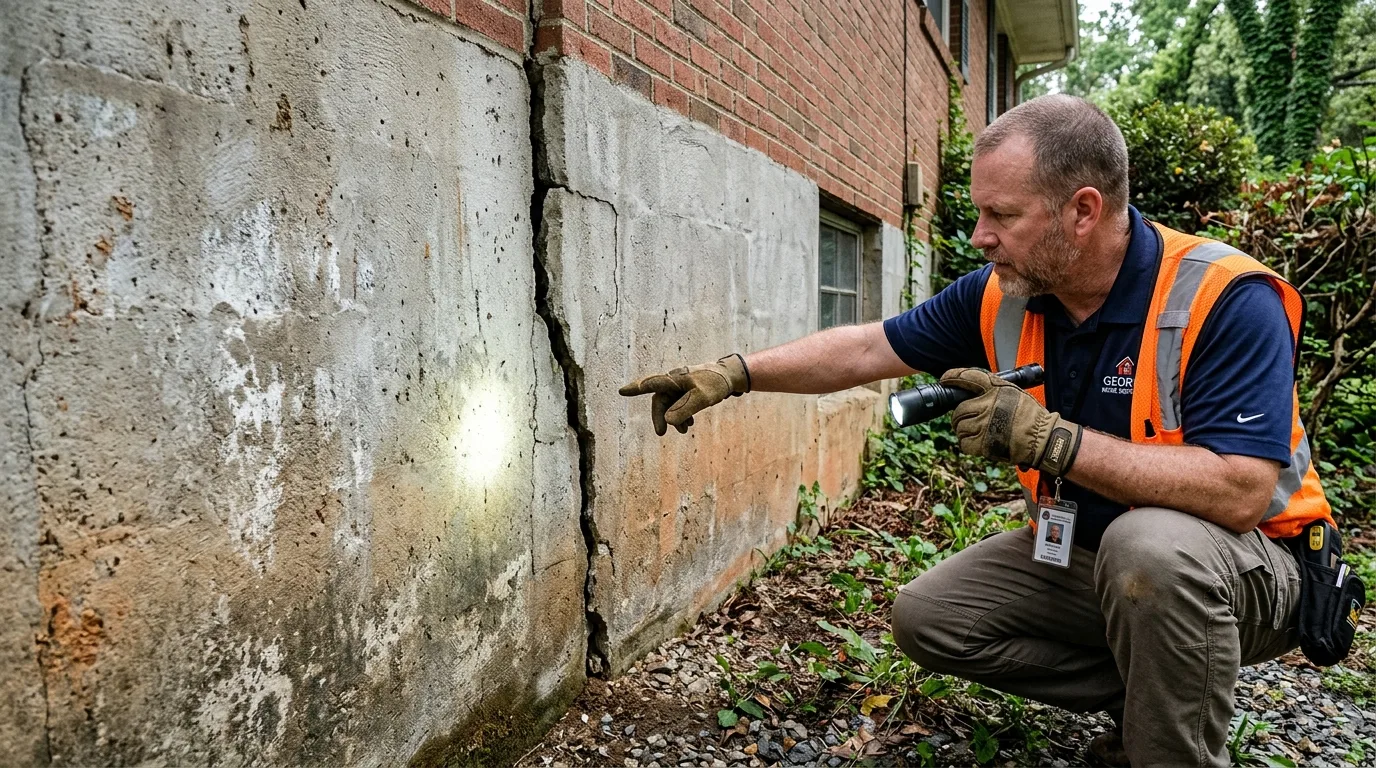
Foundation problems are one of the most anxiety-inducing home maintenance issues a Canton homeowner can face — partly because they’re often misunderstood. Not every crack in a foundation wall or slab means catastrophic failure. But some cracks do signal active structural movement that will worsen if ignored. Cherokee County homeowners deal with foundation issues at higher rates than much of the South because of one unavoidable fact: the region’s red clay soil moves with moisture changes in ways that put constant stress on any structure built on it. In this post, we cover what foundation cracks in Canton actually mean, when to act, and what repair options are available for Cherokee County homes.
Concerned About Foundation Cracks in Your Canton Home?
Canton Concrete provides free foundation assessments for Cherokee County homeowners. Call (888) 376-0955.
Why Foundation Issues Are Common in Cherokee County
A homeowner in the Governors Preserve neighborhood first notices a diagonal crack running from the corner of a door frame up to the ceiling — not from a dramatic event, but gradually over one or two seasons. This pattern is the most common sign of differential foundation settling in Canton, and it almost always traces back to the same underlying cause: Cherokee County’s expansive red clay soil moving unevenly beneath different sections of the foundation.
Georgia’s Piedmont clay absorbs moisture from Cherokee County’s 52+ annual inches of rainfall and expands — in some soils by 10–15% in volume. When the long, hot, dry Georgia summers arrive, that same clay dries and shrinks, creating voids and gaps beneath the foundation slab. When one section of the foundation happens to sit over soil that dries out faster or has less uniform drainage than another section, the two sections settle at different rates. This differential movement is what causes the characteristic diagonal crack patterns, sticking doors, and wall-ceiling gaps that Canton homeowners discover.
Types / Options: What Foundation Repair Involves
Crack injection (epoxy or polyurethane): For cracks in poured concrete foundation walls or slab surfaces that are stable (not actively widening), injection under pressure fills the crack completely and restores structural integrity. Epoxy injection bonds the concrete together; polyurethane injection is flexible and better for cracks subject to minor ongoing movement. This approach is appropriate for stable historic cracking that has reached equilibrium.
Mudjacking (slab lifting): For slab foundations where sections have settled, mudjacking pumps a cement-gravel-water slurry beneath the slab through small drilled holes, filling voids and lifting the slab back to level. Effective when the concrete itself is structurally sound but has lost sub-base support. Cost: approximately $4.66 per square foot of affected area.
Polyurethane foam injection: A lighter, faster-curing alternative to mudjacking that uses expanding polyurethane foam instead of cement slurry. Less material weight added below the slab (important for already-stressed sub-bases), faster cure time, smaller drill holes. Higher material cost than mudjacking but lower labor time.
Steel pier underpinning: For foundations where settling is progressive and significant — still moving, not just historic — steel piers are driven through the active soil layers into stable bearing material below. The foundation load is then transferred to the piers, eliminating future movement. This is the permanent solution for active settling in Cherokee County homes on soils that will continue moving. Cost: $1,000–$3,000 per pier, with most moderate-settling homes requiring 4–8 piers.
Practical Uses: Reading the Warning Signs in Canton
- Diagonal cracks from door/window corners: Classic differential settling pattern. If the cracks are less than 1/4 inch wide and haven’t changed in 6+ months, they may be historic and stable. If they’re growing or larger than 1/4 inch, schedule an assessment.
- Sticking doors or windows: Frame distortion from foundation movement. If multiple doors on the same side of the house stick simultaneously, it indicates that section of the foundation has moved.
- Horizontal cracks in basement or crawl space walls: More serious than vertical cracks — horizontal cracks indicate lateral soil pressure against the wall. Requires structural evaluation promptly.
- Vertical cracks in poured concrete walls: Often settling-related. Width and whether the crack is widening determine urgency. A crack with rust staining (indicating rebar corrosion) is more serious than a clean concrete crack.
- Water infiltration through foundation cracks: Water entering through foundation cracks in Cherokee County’s clay soil accelerates erosion of the sub-base and softens the soil bearing capacity — creating a cycle of worsening settlement.
How the Assessment Process Works
A foundation assessment in Canton should include several steps beyond just looking at the visible cracks. First, mapping all crack locations and orientations — crack patterns tell a story about which direction the foundation moved and which sections moved relative to others. Second, measuring crack widths and checking for evidence of recent change (fresh concrete dust, paint separation at crack edges). Third, walking the interior floors to check for levelness — significant variations indicate ongoing settlement.
Outside the house, we assess drainage: where does water from the roof, HVAC condensate line, and ground surface flow? Does it drain away from the foundation or toward it? Negative grade — ground that slopes toward the foundation — is one of the most common correctable causes of ongoing foundation movement in Cherokee County. We also check whether gutters and downspouts are properly extended at least 6 feet from the foundation.
The assessment conclusion distinguishes between three categories: historic stable damage (monitor, seal cracks to prevent water infiltration), active moderate damage (repair recommended within the current season), and active severe damage (repair needed promptly, defer other projects).
Free Foundation Assessment for Canton and Cherokee County Homes
We diagnose root causes and provide honest recommendations. Call Canton Concrete at (888) 376-0955.
Cost Factors: Foundation Repair in Cherokee County
Foundation repair costs in Canton are heavily dependent on damage type and extent. Crack injection repairs typically cost $400–$1,200 per crack depending on length and access. Mudjacking averages $4.66 per square foot — a 10×12 foot section of settled slab costs approximately $560 to lift. Steel pier underpinning runs $1,000–$3,000 per pier installed; most moderate-settling homes require 4–8 piers for comprehensive stabilization ($4,000–$24,000).
Drainage correction — regrading, downspout extensions, or French drain installation — is often a necessary companion to structural repair. Drainage work typically costs $1,500–$5,000 depending on scope but is essential to preventing the repaired foundation from settling again. Homeowners in Acworth and Woodstock who have deferred drainage correction alongside foundation repair consistently report recurring problems within 5–8 years.
One important context: these costs should be compared to the cost of doing nothing. Progressive foundation settling in Cherokee County does not stop on its own — the clay soil continues its annual cycle regardless. Problems that cost $5,000 to repair today often cost $15,000–$25,000 when they’ve progressed another 5 years.
Frequently Asked Questions
How do I know if my Canton foundation crack is serious?
Horizontal cracks in foundation walls and cracks wider than 1/2 inch are serious — schedule a professional assessment promptly. Diagonal cracks from door corners under 1/4 inch that haven’t changed in 6+ months may be historic and stable. Any crack that shows recent change — fresh concrete debris, separated paint, or measured widening over 3–6 months — indicates active movement and should be assessed.
Do foundation cracks always mean the house is unsafe?
No — many Canton homes have historic foundation cracks that have been stable for years and represent no ongoing structural risk. The issue is distinguishing stable historic cracks from active progressive movement. A qualified contractor or structural engineer can make this determination from on-site evidence. Don’t assume the worst based on a crack’s appearance; also don’t dismiss cracks as “just settling” without actual measurement and monitoring.
How long do foundation repairs last in Georgia?
Foundation repairs that address both the structural damage and the underlying drainage cause typically last 15–25+ years in Georgia. Repairs that address only the structural surface without fixing the soil drainage problem will recur within 5–10 years — Cherokee County’s clay soil will continue moving if drainage is not corrected. We always include drainage assessment in our foundation repair evaluation.
Related:
- Foundation repair in Canton, GA — service page
- Why Georgia red clay makes concrete prep so important
- Do I need a permit for concrete work in Canton GA?
Don't Wait on Foundation Issues — Get a Free Canton Assessment
Canton Concrete provides honest foundation assessments for Cherokee County homeowners. Call (888) 376-0955.