Concrete Retaining Walls in Canton GA: Permits, Costs & Options
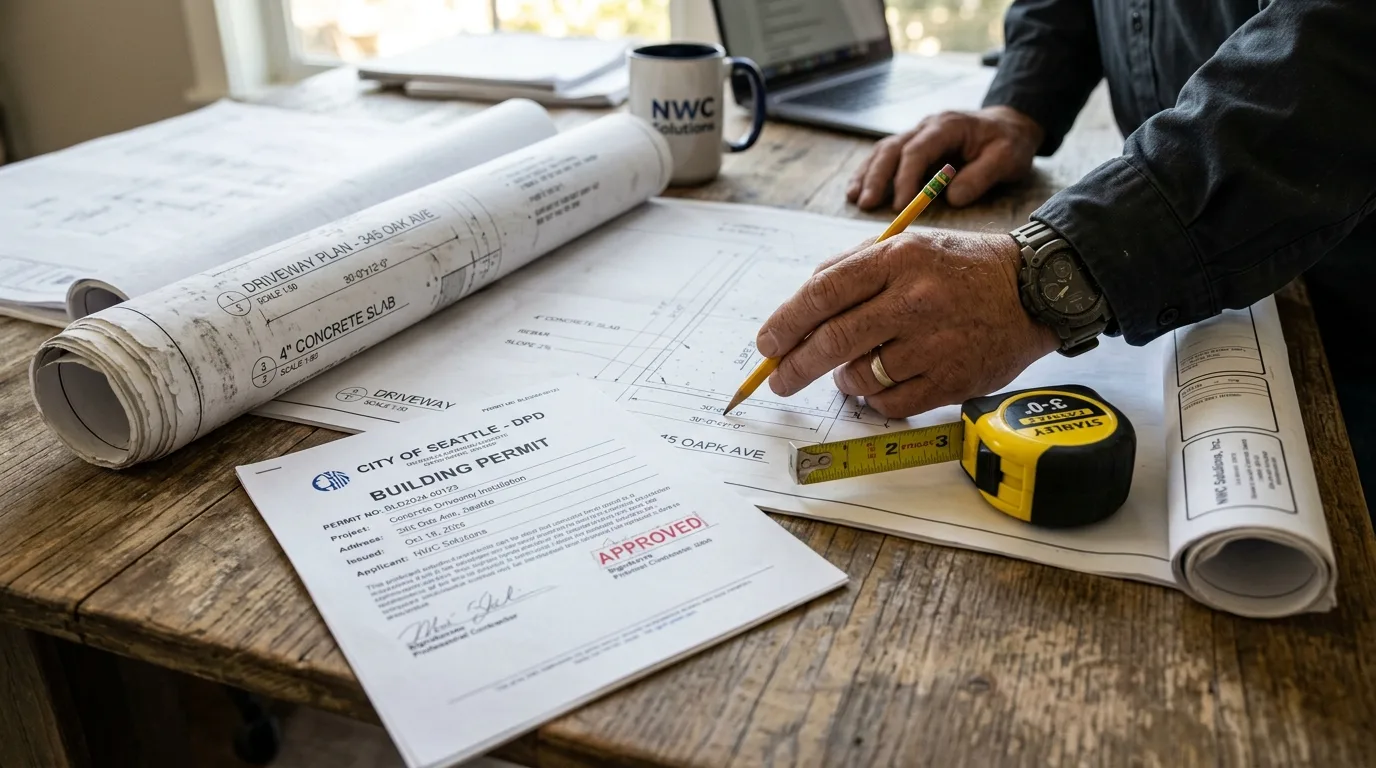
Retaining walls in Canton, GA involve three things most homeowners underestimate: the permit requirements, the drainage engineering, and the cost of doing the job correctly. Skip the permit on a 3-foot wall in unincorporated Cherokee County and you’re looking at fines, required demolition, and complications when you sell the house. Skip the drainage and you’re looking at a wall that blows out after the first heavy spring rain. In this post, we cover what you actually need to know before building a concrete retaining wall in Canton — permit thresholds, realistic costs, and the drainage requirements that separate walls that last 50 years from those that fail in five.
Get a Free Retaining Wall Estimate in Canton
Canton Concrete handles permit coordination and proper drainage engineering for every retaining wall project.
Why Retaining Walls Are in High Demand in Canton
Canton’s location in Georgia’s rolling Piedmont means the majority of residential lots have meaningful grade changes — from gentle backyard slopes to steep hillside properties in neighborhoods like Governors Preserve and Laurel Canyon. These slopes become concrete retaining wall projects when homeowners want to create a level patio area, prevent soil erosion onto neighboring property or the street, protect a driveway from adjacent slope erosion, or stabilize a foundation from downhill soil movement.
Cherokee County’s 52+ inches of annual rainfall, combined with its red clay soil’s poor drainage characteristics, makes properly engineered retaining walls especially important. When saturated clay builds up hydrostatic pressure behind an undrained wall, wall failure can be sudden and significant — even walls that look solid can blow out at the base after heavy rain if drainage wasn’t installed.
Cherokee County Retaining Wall Permit Requirements
This is the information most homeowners and some contractors get wrong, and it matters significantly for project planning and cost:
Unincorporated Cherokee County (DSC jurisdiction):
- Walls 2 feet and under: No permit required
- Walls over 2 feet: Permit required from Cherokee County DSC
- Walls over 4 feet: Permit AND engineering drawings stamped by a licensed Georgia engineer required
City of Canton (cantonga.gov):
- Walls under 4 feet: No permit required
- Walls 4 feet and taller: Permit and engineering required
The practical implication: if you’re planning a wall over 2 feet in unincorporated Cherokee County, budget for permit fees ($150–$400) and potentially engineering fees ($500–$1,500 for walls requiring stamped drawings). These costs are modest compared to the risk of unpermitted work — fines, required demolition, and complications at sale are all very real consequences.
Before starting any retaining wall project, confirm your jurisdiction (City of Canton vs. unincorporated Cherokee County) and your wall’s planned height. The measurement is taken from the top of the wall to the bottom of the footing, not from the visible wall face to the ground surface.
To confirm requirements for your specific project: email dsc@cherokeecountyga.gov (Cherokee County) or check cantonga.gov (City of Canton).
Types / Options: Concrete Retaining Wall Styles
Gravity wall (short walls up to 3 feet): A thick, unreinforced concrete wall that relies on its own weight to resist soil pressure. Simpler to build and less expensive for low walls on gentle slopes. Not appropriate for taller walls or heavy soil loads.
Cantilever reinforced wall (3–8 feet): The most common residential retaining wall type for Cherokee County. A reinforced concrete wall with a footing that extends into the soil — the footing’s weight anchors the wall against overturning from soil pressure behind it. Rebar connects the footing to the wall stem. Appropriate for most residential applications in Canton.
Tiered walls: Multiple shorter walls with planting beds or flat areas between them, creating a terraced effect on steeply sloped lots. Each wall is typically 2–4 feet tall, keeping each individual wall within simpler permit thresholds while managing larger grade changes overall. Popular for landscaped hillside lots in Ball Ground and Canton’s mountain-adjacent neighborhoods.
Poured concrete vs. concrete block: Poured concrete walls are monolithic and structurally superior; concrete block (CMU) walls are less expensive but require proper reinforcement and grouting to achieve comparable strength. For walls over 4 feet in Cherokee County where engineering is required, poured concrete is typically specified.
Practical Uses: When Retaining Walls Solve Real Problems in Canton
- Erosion control on slopes above driveways: Soil migrating downhill onto driveways is a common Canton complaint — a retaining wall stops the source rather than repeated cleanup.
- Creating level yard space: Converting a steep backyard slope into a usable patio area. Typical project: 4-foot wall across the back of a sloped lot, creating a level 20×30 ft entertaining area behind the wall.
- Foundation protection on hillside lots: A wall on the uphill side of the house intercepts lateral soil pressure and redirects drainage before it reaches the foundation.
- Pool surround on sloped lots: Tiered walls that create level space for pool installation and deck area on properties that couldn’t otherwise accommodate a pool.
- Driveway approach stabilization: Walls along both sides of a steeply sloped driveway to prevent soil from eroding onto the driveway surface and undercutting the driveway base.
How the Retaining Wall Process Works
Proper retaining wall construction in Canton starts with permit application (if required), then site layout and footing excavation below frost depth. The footing is formed and poured with full rebar, then the wall form is set on the cured footing. Wall concrete is placed and consolidated carefully around vertical rebar dowels tied to the footing bars.
Behind the wall — and this is the part most failed walls got wrong — we install crushed stone gravel from footing to near the top of the wall, with weep holes through the wall face at the base. Perforated drain pipe at the footing level carries accumulated water away from behind the wall to a safe outlet. This drainage system prevents the hydrostatic pressure buildup that causes wall failure in Cherokee County’s heavy rain events.
Backfill is compacted in lifts with a hand-operated tamper near the wall face to avoid overloading the wall during construction. Surface grading and erosion control complete the project.
Retaining Walls with Proper Drainage and Full Permit Compliance
Canton Concrete handles permits, engineering coordination, and drainage for every retaining wall in Cherokee County.
Cost Factors: 2026 Retaining Wall Pricing in Canton
Concrete retaining walls in Canton typically cost $25–$50 per square foot of wall face. A 4-foot tall, 20-foot wall (80 sq ft face) costs $2,000–$4,000. A 6-foot tall, 30-foot wall (180 sq ft face) costs $4,500–$9,000. These ranges are consistent across Cherokee County and comparable to Woodstock or Cumming rates.
Engineering fees: For walls over 4 feet in Cherokee County (or over 4 feet in City of Canton), engineering adds $500–$1,500. This includes the structural calculation and stamped drawings required for permit. We connect clients with local licensed Georgia engineers who work regularly with Cherokee County DSC.
Permit fees: $150–$400 for most residential permit applications in Cherokee County.
Drainage installation: Weep holes, gravel backfill, and perforated drain pipe — typically $3–$7 per linear foot of wall added to the base wall cost. Some contractors quote this separately or skip it entirely; we include it as standard because it’s structural.
Tiered configurations: Multiple wall tiers cost more per wall than a single wall of the same total height, due to multiple footings, forming setups, and drainage systems.
Frequently Asked Questions
How much does a concrete retaining wall cost in Canton GA?
Concrete retaining walls run $25–$50 per square foot of wall face. A 4-foot, 20-foot-long wall (80 sq ft face) costs $2,000–$4,000. Engineering fees add $500–$1,500 for walls requiring stamped drawings. Drainage installation is included in our estimates as a required structural component.
Do I need a permit for a retaining wall in Canton GA?
In unincorporated Cherokee County, walls over 2 feet require a permit; walls over 4 feet also need engineering. In the City of Canton, permits and engineering are required for walls 4 feet and taller. Confirm your jurisdiction before starting — contact dsc@cherokeecountyga.gov for unincorporated Cherokee County.
How long do concrete retaining walls last in Georgia?
A properly designed and drained concrete retaining wall in Georgia lasts 40–75 years. The most common cause of early failure is inadequate drainage — hydrostatic pressure from saturated Cherokee County clay behind an undrained wall can cause blowouts within years. Proper weep holes, gravel drainage layer, and drain pipe at the footing are essential, not optional.
Related:
- Do I need a permit for concrete work in Canton GA?
- Concrete retaining walls in Canton, GA — service page
- Why Georgia red clay makes concrete prep so important
Retaining Walls Built Right the First Time in Canton
Call Canton Concrete at (888) 376-0955. Free estimates with full permit and drainage scope included.